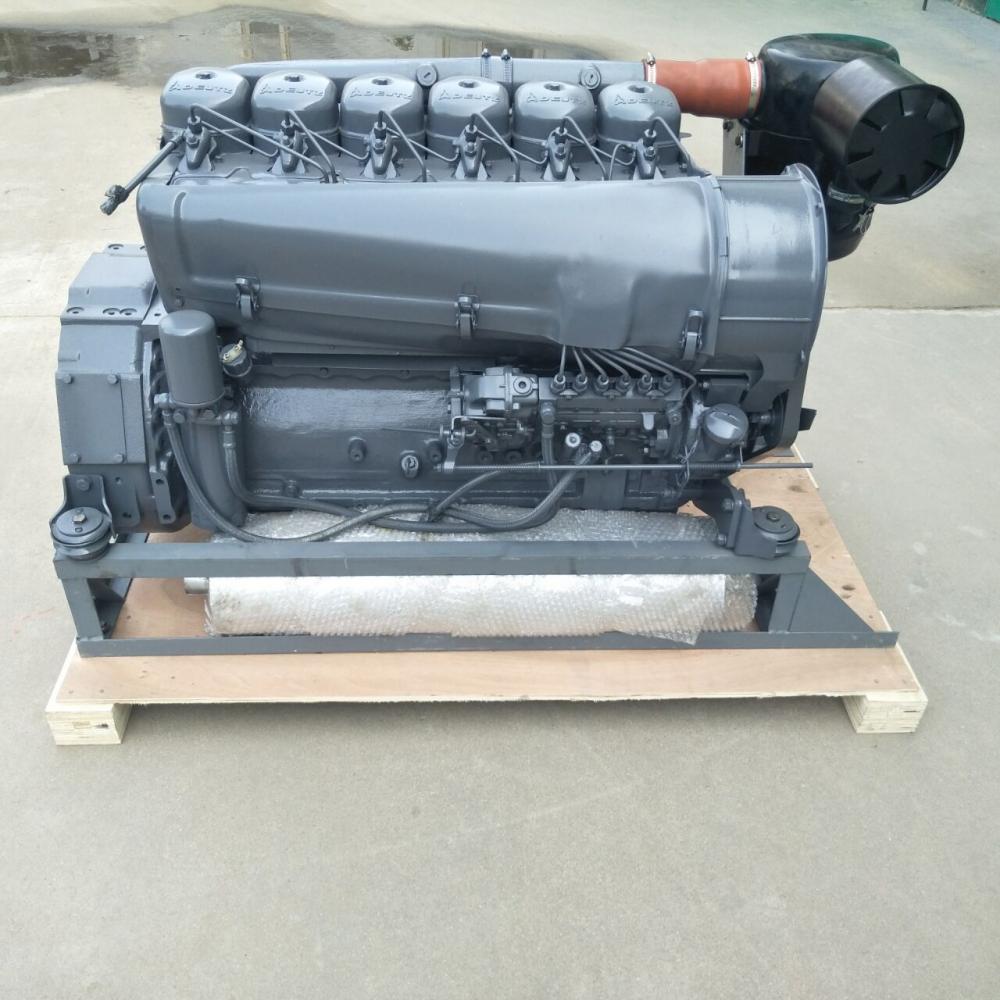
Diesel engine have 2 stroke and 4 stroke diesel engine. From cooling type, engine have air cooled diesel engine and water cooled diesel engine. Air cooled diesel engine like Deutz engine is high quality. Watercooleddiesel engine like Perkins lovol engine, Deutz water cooled engine, Cummins engine.
Someone may have concerns when they buy diesel engines. Now let
me help you to solve this problem. Following are the difference of air cooled diesel engine and water cooled
diesel engine:
The air-cooled engine block and the cylinder liner are integrated or joined into a gap-free unit. The inside is the working area where the piston slides, and the outer part is evenly arranged and densely radiated. Generally, the material with high thermal conductivity is die-casted. The working heat of the piston is directly transmitted through the cylinder, and is carried away by the flowing air between the fins. This method is generally used on two-stroke engines. The cylinder of the water-cooled engine is cast with a complicated cooling water channel (dry cylinder liner) or forms a cooling water channel (wet cylinder liner) with the cylinder liner. The piston works in the cylinder liner, and the heat is transferred to the cooling water in the water channel through the cylinder liner. To implement cooling. This method is commonly used on four-stroke engines. Air cooling uses air as the cooling medium. The high-speed flowing air directly removes the heat of the high-temperature parts to reduce the temperature of the engine. Air cooling is divided into natural air cooling and forced air cooling. Natural air cooling is the use of airflow that comes in from the mechanical movement to directly cool the cylinder head, cylinder and other parts. In order to improve the heat dissipation efficiency, the air-cooled engine adopts an increase in the heat dissipation area of the engine surface, that is, a heat sink is cast on the outer surface of the cylinder head, the cylinder liner, the cylinder body, and the like. At higher temperatures, such as near the combustion chamber and exhaust vents, the heat dissipation area is greater. The heat sink should be smooth and clean to improve the heat dissipation performance; the forced air cooling type uses a fan to increase the flow rate of the air flowing through the heat sink to improve the cooling effect. That is, the engine itself drives the fan to increase the flow rate and flow rate of the airflow, and reliably cools the cylinder head, the cylinder liner, the cylinder body, etc. through the reasonable distribution of the air guiding hood.
Water cooling is the use of water (or antifreeze) as a cooling medium to take away the heat of the engine's high temperature parts to ensure the normal operating temperature of the engine. The water cooling system consists of a water pump, a radiator, a fan, a thermostat, a water jacket and a water pipe. The coolant of the water cooling system is in the water jacket of the engine, and the temperature of the high-temperature machine is absorbed, and the temperature rises. The radiator is cooled by the fan and the windward airflow, and then the cooled coolant is pumped into the water jacket for circulation cooling. There are two ways to circulate the coolant: when the engine water temperature is lower than 70 °C, the thermostat is closed, and the coolant flows through the pump-water jacket-heater bypass tube-pump (without the radiator), that is, the small cycle This is beneficial to the rapid rise of temperature after the engine starts; when the engine water temperature exceeds 70 ° C, the thermostat automatically opens, the coolant flows through the water pump - water jacket - thermostat switch valve - radiator - water pump, that is, large cycle, Enhance the cooling effect. The cooling liquid is generally soft water to reduce the scale deposit in the inner wall of the radiator and the water jacket, and affect the heat dissipation effect. Use antifreeze in cold areas or in winter. The water cooling system often has an auxiliary container (also called an expansion tank), which communicates with the radiator. When the coolant is heated and expanded to form steam, the steam valve on the radiator cover stores the water and steam overflowing the radiator, when cooling. When the liquid cools down, it can be replenished to the radiator through the drain valve. The suitable operating temperature of the air-cooled engine cylinder wall is l50~180°C, and the suitable working temperature of the water-cooled engine cylinder water jacket is 85~95°C. The air-cooled engine has few parts, simple structure, light weight, low manufacturing cost, high power utilization, no leakage, freezing, scaling, etc., easy to use and maintain, good environmental adaptability, and short warm-up time after startup. Disadvantages are uneven cooling surface, high thermal load, high power consumption of the fan and high noise during operation. The advantages of the water-cooled engine are: good cooling effect, uniform cooling, reliable operation, no environmental impact, low noise, and the disadvantages are complicated structure, high cost, high failure rate and complicated maintenance. Since there are energy-consuming devices such as fans and pumps, power loss is large.